05 City Guides Wyoming
Things to Do in Jackson WY on a Road Trip: Town and Tetons
Summary
Jackson is a small western town at the south end of a valley where the Teton Range rises with nothing in front of it. This guide to things to do in Jackson WY on a road trip starts in the crowded town square and moves outward, to the open valley and then the peaks. Summer and early fall are the seasons for the park; winter is for skiing and the elk, and key park roads close to cars from November through April.
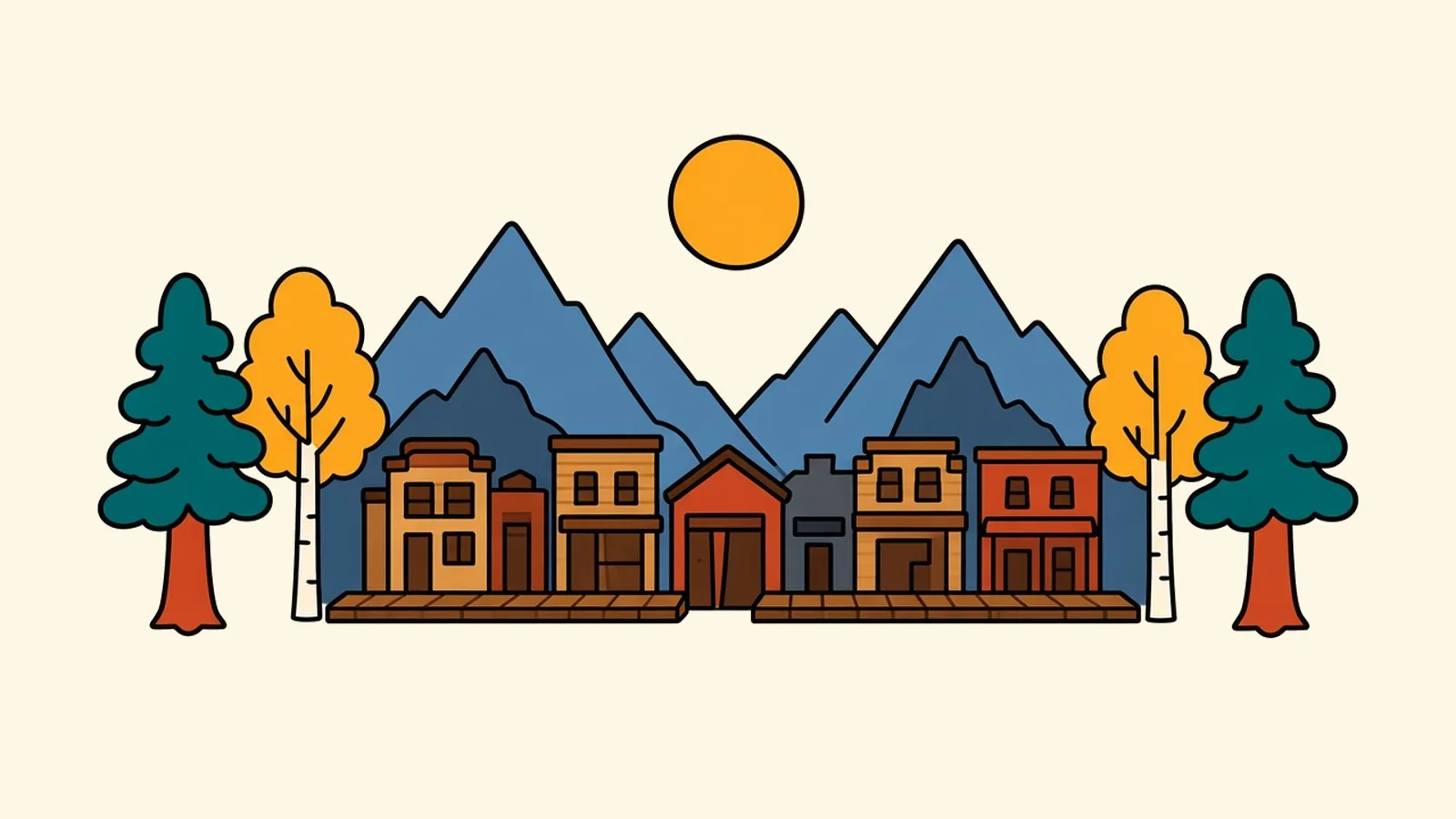
Boots on planks. That’s the sound under everything at midday: heels knocking along the wooden boardwalk, a screen door slapping shut, a laugh from two storefronts down.
You’re standing at a corner of the town square, and it’s crowded. People cut through the little park beneath arches built from thousands of shed elk antlers, pale and tangled, and pause for the same photo you’re about to take. In summer, a stagecoach rolls by behind its team of horses. The shop windows are full of bronze elk, felt hats and landscape paintings in heavy frames.
Over the rooftops, a ski hill climbs steeply from the end of the street.
One thing is missing, though. From here, from anywhere on this square, you can’t see the mountains everyone came for. Hold on to that.
Quick plan
- How long
- Two nights at least, three if you can.
- Best months
- Mid-June to September, or January through March to ski.
- Winter roads
- The Teton Park Road is closed to cars from November to April, and Yellowstone’s South Entrance is closed to cars from November to mid-May.
- Getting in
- Jackson’s airport is inside Grand Teton National Park; Idaho Falls is about 90 miles away.
- Fees
- Non-US residents pay an extra per-person fee at the national parks.
Things to do in Jackson WY on a road trip, from the square to the skyline
This page moves outward. First comes the town, about 6,200 feet up at the valley’s southern tip. Then the valley floor, and then the park. Jackson is the town. Jackson Hole is the whole valley it sits in, a long, flat-bottomed basin walled in by mountains.
You can do the town in an afternoon. The valley takes a day, and the park deserves two if you have them.
Start small. The view takes care of the rest.
The town
The square comes first. Four antler arches mark its corners. The antlers are shed by elk on the refuge north of town, gathered each spring, and the arches get rebuilt from time to time as the old ones weather.
Then the boardwalks. Galleries, outfitters, hat shops, western-wear stores, cafés. It’s busy, and it’s not cheap.
Next, the hill. The town ski hill rises a few blocks east of the square, and its gondola runs in both summer and winter.
Then the museum. The wildlife art museum is built into a hillside about 2.5 miles north of the square, looking out over the elk refuge.
That’s the town. It’s small enough to walk in an afternoon, and the best thing about it is how quickly it gives way to open country.
The valley
North of town the buildings stop abruptly at a fence line, and beyond it the National Elk Refuge stretches out in grass and marsh. In winter it fills with thousands of elk that come down from the high country in November and December and stay until March or April. From mid-December into early April, horse-drawn sleighs carry visitors out among the herd. In winter 2026-27 they run December 19 to April 3, daily except Christmas Day.
West of town, the Snake River braids its way south through cottonwoods and gravel bars. In summer, people float it. In any season, the willow bottoms along it are where you’re most likely to see a moose standing still in the brush.
What most first-time visitors overlook is that winter is the best season for wildlife on the valley floor. Deep snow in the mountains pushes elk, bison and moose down low, where you can see them from the road.
Farther west, the small settlement of Wilson lies below Teton Pass. North of it, at the base of the mountains, is Teton Village, the ski-resort village with the aerial tram.
Out here it goes quiet, and the sky takes up most of the frame.
The park
Head north out of town on US-26/89/191 and you pass a long butte on your left, the one that was hiding the range all along. Past it, the land opens up into sagebrush, and there they are.
The Teton Range rises straight out of the valley floor, with no foothills in front of it to soften the view. In the morning, the peaks are sharp and gray, with snow lying in the high gullies well into summer. The square couldn’t show them to you because that butte stands between the town and the mountains.
Grand Teton National Park holds the views most people come for. On Mormon Row, old wooden barns stand in front of the range. At Jenny Lake, the trails run along a glacial lake right at the base of the peaks. In summer, the road up Signal Mountain looks out over the whole valley. And at Oxbow Bend, the Snake River slows to a mirror.
Grand Teton charges its own entrance fee, separate from Yellowstone’s, and has been cashless since May 2026. Visitors 16 and older who aren’t US residents owe an additional $100 per person at both parks unless they hold a qualifying pass. To work out whether an annual pass pays off, read is the America the Beautiful pass worth it.
In winter, the Teton Park Road is closed to cars from November 1 to April 30 between Taggart Lake Trailhead and Signal Mountain Lodge. From mid-December into mid-March it’s groomed for skiing and snowshoeing. The Moose-Wilson Road closes from November 1 to mid-May. US-89/191 stays plowed all the way north to Flagg Ranch.
That’s the view the square was keeping from you, and it’s worth every mile.
Getting there
By air: Jackson Hole Airport (JAC), 10 miles or so up the highway, is the only commercial airport inside a national park. Idaho Falls Regional (IDA) is about 90 miles west over Teton Pass, and Salt Lake City has the widest choice of flights.
By road: US-26/89/191 runs north through Grand Teton toward Yellowstone. US-89 runs south through the Snake River Canyon to Alpine and Star Valley. WY-22 goes west over Teton Pass into Idaho, and US-26/287 goes east over Togwotee Pass toward Dubois.
Drive times:
- Idaho Falls: about 89 miles, roughly 2 hours, over Teton Pass.
- Salt Lake City: about 273 miles, roughly 5 to 5.5 hours, via I-80 and US-89 through Star Valley.
- Denver: about 513 miles, roughly 8 to 9.5 hours, mostly on I-80 across southern Wyoming.
The airport is the quick way in, but driving lets you see how big the valley is.
Jackson Hole, place by place
Downtown and the town square
This is the dense core: the antler arches, the boardwalks and a few blocks of galleries, restaurants and outfitters. Park once and walk.
East Jackson and the town ski hill
East of the square, the streets climb toward the base of the ski hill. The gondola and the trails on the hill make it the easiest mountain to reach in the valley, a few blocks from downtown rather than a drive away.
West Jackson and Broadway
Broadway runs west from downtown past motels, grocery stores and everyday businesses toward the junction with WY-22. It’s the practical side of town for groceries and gas.
Wilson
Wilson is a small settlement below Teton Pass, about 7 miles west of town, with a few restaurants and a country-store feel. The Moose-Wilson Road runs north from here toward the park in the warmer months.
Teton Village
At the base of the range about 12 miles from town, this is the ski-resort village, built around the aerial tram. In winter it’s all skiers. In summer, the tram and the trails take hikers up into high country without the climb.
Moose and the park’s south end
About 13 miles north of town, Moose has the park’s main visitor center, river access on the Snake, and the turnoff onto the Teton Park Road. Most first visits to the park start here.
Kelly and the Gros Ventre
East of the highway, the small community of Kelly sits in ranch country along the Gros Ventre River. Bison often graze the flats nearby. Up the river road, the Gros Ventre Slide shows where a whole mountainside slid down and dammed the river, forming Lower Slide Lake.
Over the pass and out of the valley
Every way out of Jackson Hole climbs, and each one has its season.
West, WY-22 climbs over Teton Pass, topping out at 8,431 feet, with grades up to 10 percent. From November 15 to April 1, trailers aren’t allowed. Since October 1, 2026, drivers of RVs, vehicles towing trailers and vehicles of 10,000 pounds or more have needed a free online Safe Pass self-certification. Avalanche control can close the road after storms. On the far side, the road drops into Idaho’s Teton Valley.
South, US-89 follows the Snake River Canyon down toward Alpine, a slower, gentler road between steep walls. It’s also the year-round alternative when the pass is shut.
North, the road runs through both parks on the parkway that links them, in at Yellowstone’s South Entrance. That works only from about mid-May to the end of October. In 2027, the South Entrance is projected to reopen to cars on May 14.
East, US-26/287 crosses Togwotee Pass toward Dubois. It usually stays open through winter, apart from weather closures.
Before any of them, pull over on a sagebrush flat north of town and cut the engine. Then just sit there facing the range.
It’s very quiet.
The Jackson Hole cost of living, and who keeps the valley running
People here work in tourism and hospitality, at the ski areas, in guiding, construction and real estate, and in conservation and wildlife science. Finance and wealth-management work has grown too, in a state with no personal income tax. Housing prices rank with the steepest in the Mountain West, so many people who work in town commute in over Teton Pass from Idaho or up the canyon from Star Valley.
Two national parks next door, a ski hill you can walk to from the square, elk and moose on the valley floor and a serious arts scene for so small a town go a long way toward explaining the rent.
Practical notes for Jackson Hole
- Winter in the parks: Plan around the Teton Park Road and Yellowstone closures. Both parks are still open on skis and snowshoes.
- Wildlife distance: Stay at least 100 yards from bears and wolves and 25 yards from all other animals, including bison, elk and moose.
- Bear spray: Carry it on trails and know how to use it.
- Teton Pass: Check WYDOT 511 before you drive it, and never take a trailer over it in winter.
- Lodging: I’d book summer and ski-season rooms as early as you can; prices run high.
- Jenny Lake: In summer, the parking lots fill early. Arrive before 9 a.m. or after 4 p.m.
- Fees: Non-US travelers should read the pass post before reaching the entrance.
- Altitude and sun: Carry extra water, wear sunscreen, and pack layers even in July.
On the Rockies and parks route
Rockies and parks route: Denver to Glacier National Park. Previous: Salt Lake City, about 273 miles, roughly 5 to 5.5 hours via I-80, Star Valley and the canyon of the Snake. Next: West Yellowstone, about 130 miles, roughly 3 to 4 hours through Grand Teton and Yellowstone (mid-May to October only); or about 127 miles, roughly 2.5 to 3 hours via Teton Pass, Ashton and Island Park.
Pair it with:
- Teton Valley, Idaho: Victor and Driggs, over the pass and under an hour away in good conditions.
- Star Valley: small farm towns south through the Snake River Canyon.
- Bozeman: for readers continuing on into Montana.
Summer valley or winter valley: which Jackson would you pick?
Common questions
What are the best things to do in Jackson WY on a road trip?
Walk the town square under its shed-antler arches, ride the gondola up the town ski hill, visit the wildlife art museum north of town, and then get out into the valley: the National Elk Refuge, the Snake River, Wilson and Teton Village. Save most of your time for Grand Teton National Park, with Mormon Row, Jenny Lake, Signal Mountain and Oxbow Bend.
Is Jackson Hole worth visiting in winter?
Yes, if you want snow and wildlife rather than park road trips. The ski resort at Teton Village and the town ski hill both run in winter, and from mid-December into early April you can take a horse-drawn sleigh ride among the elk wintering on the refuge. Inside Grand Teton, the Teton Park Road is closed to cars from November 1 to April 30, though it's groomed for skiing and snowshoeing from mid-December to mid-March.
Can you drive from Jackson to West Yellowstone through the park?
Only from about mid-May to the end of October. The drive is about 130 miles, roughly 3 to 4 hours without stops, north through Grand Teton, in Yellowstone's South Entrance and past Old Faithful. Yellowstone's South and West entrances close to cars from November 1, and the South Entrance is projected to reopen on May 14, 2027. The rest of the year, drive about 127 miles over Teton Pass and through eastern Idaho, roughly 2.5 to 3 hours.
How far is Jackson from Salt Lake City, Idaho Falls and Denver?
Idaho Falls is about 89 miles, roughly 2 hours, over Teton Pass. Salt Lake City is about 273 miles, roughly 5 to 5.5 hours, via I-80 and US-89 through Star Valley. Denver is about 513 miles, roughly 8 to 9.5 hours, mostly on I-80 across southern Wyoming.
Is Teton Pass open in winter?
Usually, but it's steep, with grades up to 10 percent, and it can close for avalanche control. Trailers aren't allowed from November 15 to April 1. Since October 1, 2026, drivers of RVs, vehicles towing trailers and vehicles of 10,000 pounds or more have needed a free online Safe Pass self-certification. Check WYDOT 511 before you go. If the pass is closed, the alternative is US-26 through Swan Valley and Alpine.
What is the cost of living like in Jackson Hole, and what are the main jobs?
It's among the most expensive places to live in the Mountain West, mostly because of housing, and many workers commute in from Idaho or Star Valley. The main work is in tourism and hospitality, the ski areas, guiding, construction and real estate, conservation and wildlife science, and finance.