10 City Guides California
San Diego Road Trip Guide: Where the Road Meets the Pacific
Summary
San Diego is the tenth and last stop, where this cross-country route meets the Pacific. The weather is mild enough for almost any month, though fall is my pick. This guide to things to do in San Diego on a road trip loops from the ocean inland and back again, then looks back at the whole drive from Houston.

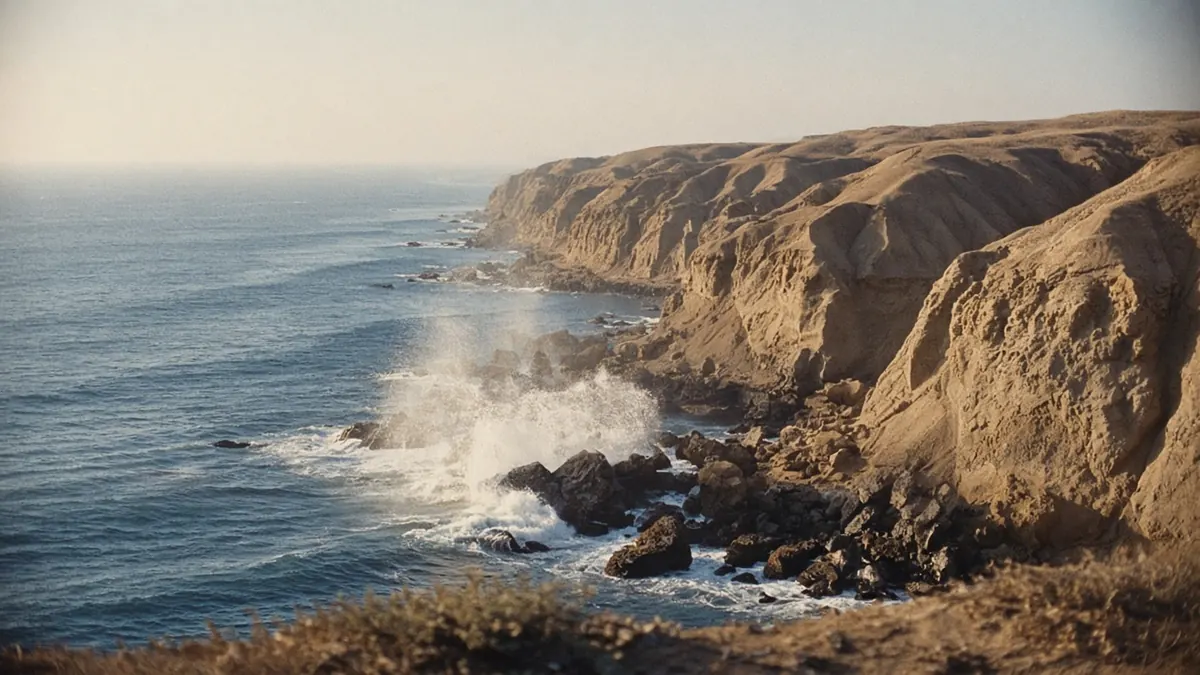
You hear the cliffs before you see the water. It’s a deep, hollow boom, then a hiss, then a pause, then another boom, rising from somewhere beneath your feet. It’s late morning on the Sunset Cliffs in Point Loma, and the swell is pushing into the sea caves under the sandstone and forcing the air back out.
You walk toward the sound along a dirt path. Then the land falls away, and the Pacific is right there, deep blue and white at the edges, spray hanging in the sun over the rocks. Pelicans glide by in a line, level with you. A surfer in the water below waits for the next set.
Stay well back from the edge. These cliffs are soft sandstone, the city posts warnings, and the overhangs can collapse without notice.
The country runs out here, and the road finally has nowhere left to go. So slow down.
Quick plan
- Linger
- Three nights. This is where you rest after the drive.
- Prime months
- September or October, though any month works.
- Low-tide tip
- Cabrillo’s tide pools are at their best in late fall and winter.
- Road in
- About 120 miles from Los Angeles, and a little over 2,000 miles from Houston.
Things to do in San Diego on a road trip, from the ocean and back

This page follows a loop. It starts at the ocean in Point Loma, at Cabrillo National Monument and the mouth of the bay, and then crosses the water to downtown and Coronado. It climbs to Balboa Park on the mesa, drops down into Old Town, and then returns to the beaches, from Ocean Beach north to La Jolla. You can drive it in a day if you rush, but San Diego doesn’t reward rushing. Distances are shorter than in Los Angeles, the trolley and ferries fill in some gaps, and the coast is always within reach. My advice is simple: base yourself near the water and let the city come to you.
Point Loma and the mouth of the bay

At the tip of the Point Loma peninsula, Cabrillo National Monument marks the 1542 landing of a Spanish-flagged expedition, the first Europeans to set foot on what’s now the US West Coast. Up top there’s an old lighthouse and a view that takes in the whole harbor, the downtown towers, Coronado, and on a clear day the hills of Mexico to the south.
Down on the rocky shore on the ocean side are the tide pools. At low tide, you can crouch over pools of anemones, small crabs and sea stars. Late fall and winter bring the best daytime low tides. There’s a per-vehicle fee, and the America the Beautiful annual pass is accepted.
Back toward town, Point Loma is still a working harbor, with fishing boats, sailboats and a Navy presence along the bay. Shelter Island, a strip of land lined with marinas and a waterside path, is the spot to watch the boats. Find a bench facing the channel and stay a while. Sailboats tack back and forth, a gray Navy ship slides out toward the open ocean, and the halyards clink against the masts behind you. Nobody here seems to be in a hurry, and after this many miles on the road, you don’t need to be either.
Across the water: the bay, downtown and Coronado

The bayfront walk runs past downtown along the Embarcadero, with tall ships, cruise terminals and a retired aircraft carrier, now the USS Midway Museum, tied up at the pier. The towers rise right behind it.
From the waterfront, a ferry crosses to Coronado in a few minutes, or you can drive over the long, curving Coronado Bridge. Coronado is a separate city on a peninsula, with a wide, flat beach so bright it almost glows. Its famous red-roofed Victorian hotel dates to 1888. Walk the sand, then take the ferry back as the light softens.
Up on the mesa: Balboa Park

Balboa Park sits on a mesa above downtown. Its Spanish-style towers, domes and arcades were built for the Panama-California Exposition of 1915 and 1916. Today the park holds gardens, a botanical building with a lath roof, a lily pond and a string of museums along El Prado.
The San Diego Zoo also sits in the park, at its north end. Walking the park and its gardens costs nothing; the museums and the zoo charge admission.
Take your time. Stroll through the arcades in the shade, sit by the fountains, and listen for organ music or a street musician drifting across the plaza.
Old Town and the mission

Old Town San Diego State Historic Park recreates the town as it was in its Mexican and early American years, with adobe buildings, shops and small museums arranged around a plaza. Entry is free, and the visitor center and museums generally keep 10 a.m.–5 p.m. hours.
Mission San Diego de Alcalá, California’s first mission, was founded in 1769 on the hill above Old Town and moved a few miles up Mission Valley a few years later. Its white facade and tall bell wall still stand there, with a quiet garden behind them. It’s an active parish, so visit quietly.
San Diego neighborhoods along the loop
Point Loma and Ocean Beach

Point Loma has the cliffs, the harbor and the national monument. Next door, Ocean Beach (OB) keeps its old beach-town character, with a long fishing pier, a dog beach, surf shops and an easygoing main drag on Newport Avenue.
Downtown and the Gaslamp Quarter

Victorian-era blocks of shops, restaurants and bars make up the Gaslamp Quarter. The ballpark district and the bayfront are a short walk away.
Little Italy

Little Italy was once home to an Italian American fishing community that worked the tuna boats. Now it’s a neighborhood full of restaurants and cafés, with a big farmers market every Saturday.
Barrio Logan

Barrio Logan grew up as a Mexican American neighborhood by the bay. Its heart is Chicano Park, under the approaches to the Coronado Bridge, where murals cover the concrete pillars. It’s a National Historic Landmark, and galleries line the nearby streets.
Coronado

Coronado’s wide beach, quiet streets and old hotel make it feel like a small town, though downtown is just across the bay. Take the ferry if you can.
Hillcrest and Bankers Hill

North of downtown, Hillcrest is the center of San Diego’s LGBTQ+ community, with restaurants, bars and a big rainbow flag over its main intersection. Next door in Bankers Hill, the Spruce Street Suspension Bridge, built in 1912, sways gently over a canyon.
North Park and South Park

East of Balboa Park, North Park and South Park have Craftsman houses, craft breweries and independent shops along 30th Street and University Avenue.
Old Town

The city’s story begins in this corner, with the state historic park, Mexican restaurants and the hill above where the first mission and fort once stood.
Mission Beach and Pacific Beach

A boardwalk runs along the sand past cottages, surf shops and an old wooden roller coaster that still runs at Belmont Park. Mission Bay’s calmer water sits on the other side.
La Jolla

La Jolla has the cove, sea caves you can kayak to, tide pools and bluff-top walks. Seals and sea lions haul out on the rocks. Point La Jolla and part of Boomer Beach are closed year-round to protect the sea lions, so keep your distance even where the shore is open. UC San Diego sits up the hill.
North of La Jolla, Torrey Pines State Natural Reserve protects rare pines on the bluffs. It has been closed for construction into early 2027, so check with California State Parks before you plan a hike there.
Fish tacos and the Baja table

San Diego eats close to the border and close to the water.
Fish tacos, with battered fish, cabbage, crema and lime, are the local classic. The California burrito, carne asada and french fries rolled together in a flour tortilla, is a San Diego original. Baja-style seafood cocktails, aguachile and grilled fish turn up across the city.
There are craft breweries everywhere. In homes and family restaurants across the county, Mexican and Filipino cooking run deep.
San Diego seasons, from May Gray to October
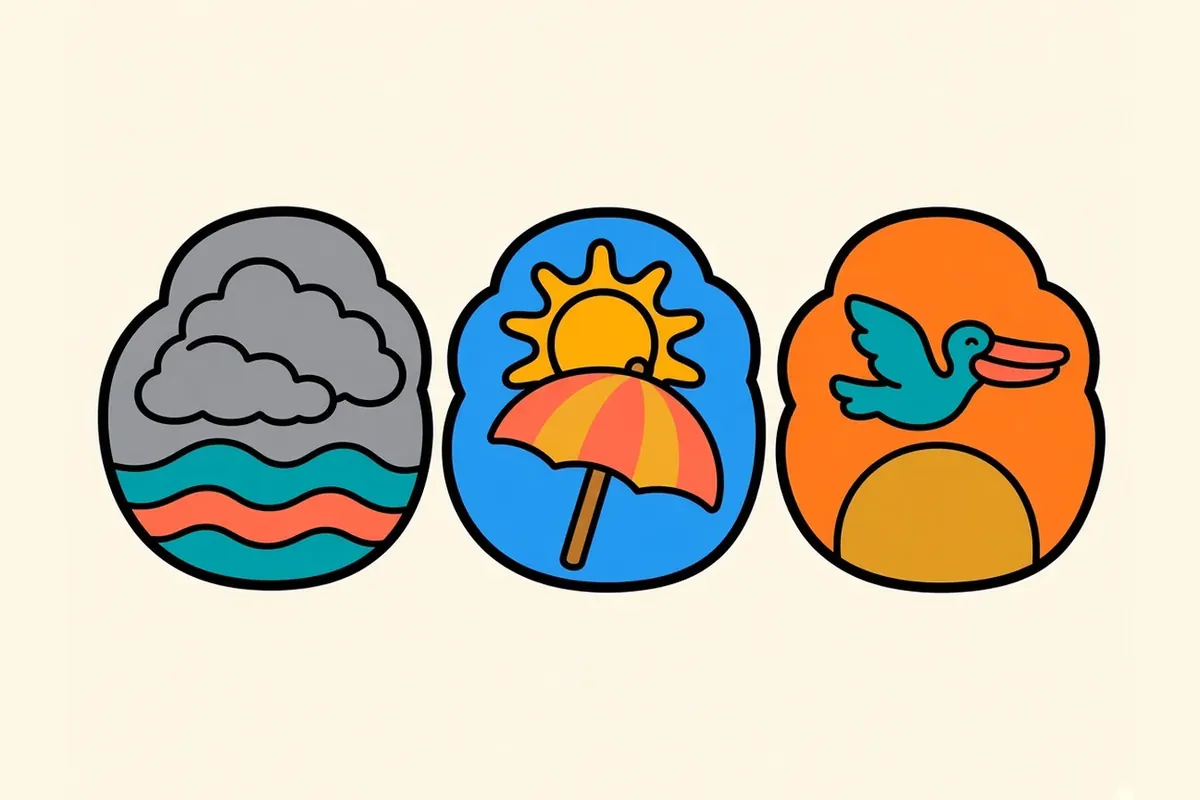
It’s mild all year, but the seasons are real. In May and June, the marine layer often covers the coast in the morning, and locals call it May Gray and June Gloom. Late summer and fall are usually the warmest and clearest at the beach, so I’d pick September or October. Winter is cool and mostly sunny, with occasional storms and the best low tides.
In July, the big comics and pop-culture convention fills the convention center and books up downtown hotels, so if you’re visiting that week, plan ahead or stay outside downtown.
Work, rent and the weather trade-off

The military is a major presence, with Navy and Marine Corps bases around the bay and up the coast, and defense and shipbuilding grew up alongside it. Biotech and life sciences cluster around Torrey Pines and the university. There’s also telecommunications and tech, tourism and hospitality, health care and research, and a large cross-border economy of trade and manufacturing linked to Tijuana.
Housing is among the most expensive in the country, and California has a state income tax. Most people make that trade knowingly: a mild climate, beaches inside the city, canyons and parks between neighborhoods, Baja-influenced food and a region that spans two countries.
San Diego tips for the coast

- Base near the water: Distances are shorter than in Los Angeles, and the coast is the whole point.
- Layers: Summer mornings can be gray and cool. Bring a sweater for the coast.
- Tide pools: Check a tide chart, go at low tide, wear shoes with good grip, and leave everything where it is.
- Cliffs: Stay behind fences and back from the edge at Sunset Cliffs and in La Jolla.
- Sea lions and seals: Give them space. Some beach areas close entirely for them.
- Parking: La Jolla, OB and Balboa Park fill up on weekends. Go early, or use the trolley or rideshare downtown.
- Rip currents: Swim near lifeguard towers.
- Crossing to Tijuana: The San Ysidro crossing, about 20 miles south of downtown, is described by federal officials as the busiest land border crossing in the Western Hemisphere. Carry a passport or another document accepted for reentry, check current requirements on both sides, and expect a wait coming back.
Houston to San Diego: looking back from the Pacific

The last leg of the Houston to San Diego road trip is the easiest: about 120 miles down I-5 from Los Angeles, past the long open coast at Camp Pendleton, through Oceanside and the North County beach towns, and into the city.
Then, without meaning to, you replay the whole thing. Sticky Gulf air in Houston that clung to your shirt. A spring-fed pool in Austin, cold enough to steal your breath. Cypress shade over San Antonio’s slow green river. Hours of empty I-10 across West Texas, the clock slipping back an hour somewhere past Van Horn, then El Paso and Juárez sharing one valley beneath the Franklins. The slow climb to 7,000 feet at Santa Fe. Gold cottonwoods and drifting balloons along the Rio Grande in Albuquerque. Pines and a sky crowded with stars at Flagstaff. Red rock against neon in Las Vegas. Then the freeways of Los Angeles, merging and splitting, until the land gave way to ocean.
A little over 2,000 miles, from the Gulf to the Pacific.
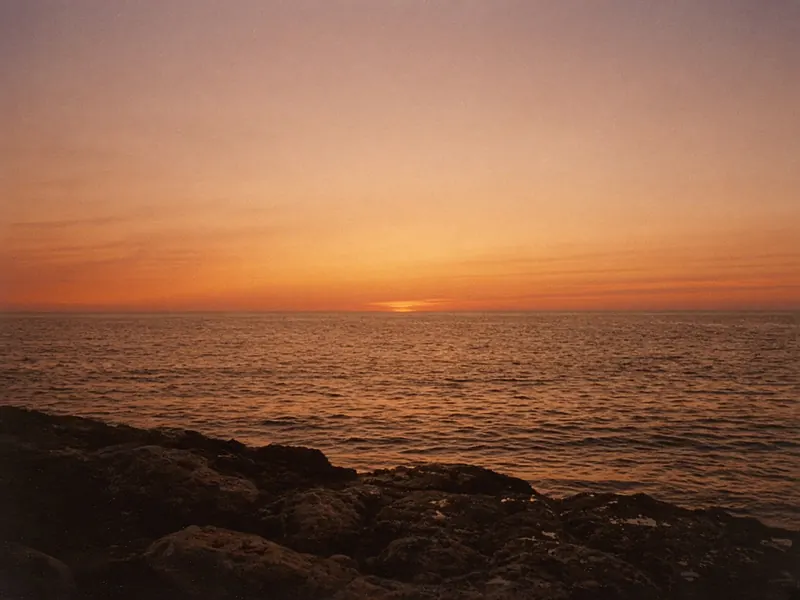
Go back to the cliffs in the evening. The caves are quieter now, the tide has turned, and the wind has dropped. The sun sinks toward the water, flattening into an orange line, and the whole sea turns copper. People sit on the rocks in sweatshirts, saying very little. Behind you, the car is parked and cooling, with nothing left to drive. I’d stay one more night before you turn the car around. The sun touches the horizon, and for a moment, the edge of the country is lit gold.
Ready for another run? It starts again in Houston.
You’ve come a little over 2,000 miles with us. Which stop would you go back to first?
Common questions
What are the best things to do in San Diego on a road trip?
Walk the Sunset Cliffs and visit the tide pools at Cabrillo National Monument in Point Loma, stroll the bayfront and take the ferry to Coronado, spend a day in Balboa Park, explore Old Town and the mission, and finish along the beaches from Ocean Beach to La Jolla.
What are the best San Diego neighborhoods to explore?
Point Loma and Ocean Beach, Downtown and the Gaslamp Quarter, Little Italy, Barrio Logan, Coronado, Hillcrest and Bankers Hill, North Park and South Park, Old Town, Mission Beach and Pacific Beach, and La Jolla.
When is the best time to visit San Diego?
Any month works, but September and October are usually the warmest and clearest at the beach. Spring and early summer often start gray along the coast, a pattern called May Gray and June Gloom. Winter is cool and mostly sunny, with occasional storms. Downtown hotels fill up during the big comics convention in July.
When is the best time to see the Cabrillo National Monument tide pools?
Late fall and winter, when the lowest tides fall during daylight park hours. The park is open daily from 9 a.m. to 5 p.m. except Thanksgiving and Christmas, and the tide pool area closes at 4:30 p.m. Check a tide chart, wear shoes with good grip and leave everything where you find it. There's a per-vehicle entrance fee, and America the Beautiful passes are accepted.
How long is the drive from Los Angeles to San Diego, and how far is the whole Houston to San Diego road trip?
Los Angeles to San Diego is about 120 miles south on I-5, around 2 hours without traffic and often 2.5 to 3. The whole Houston to San Diego road trip on this route runs a little over 2,000 miles: Houston to Austin, San Antonio and El Paso across Texas, north to Santa Fe and Albuquerque, west to Flagstaff, then Las Vegas, Los Angeles and San Diego.
What is the cost of living like in San Diego, and what are the main jobs?
High, especially housing, which is among the most expensive in the country, and California has a state income tax. The main fields are the military, with a major Navy and Marine Corps presence, plus defense and shipbuilding, biotech and life sciences, telecommunications and tech, tourism and hospitality, cross-border trade and manufacturing, and health care and research.